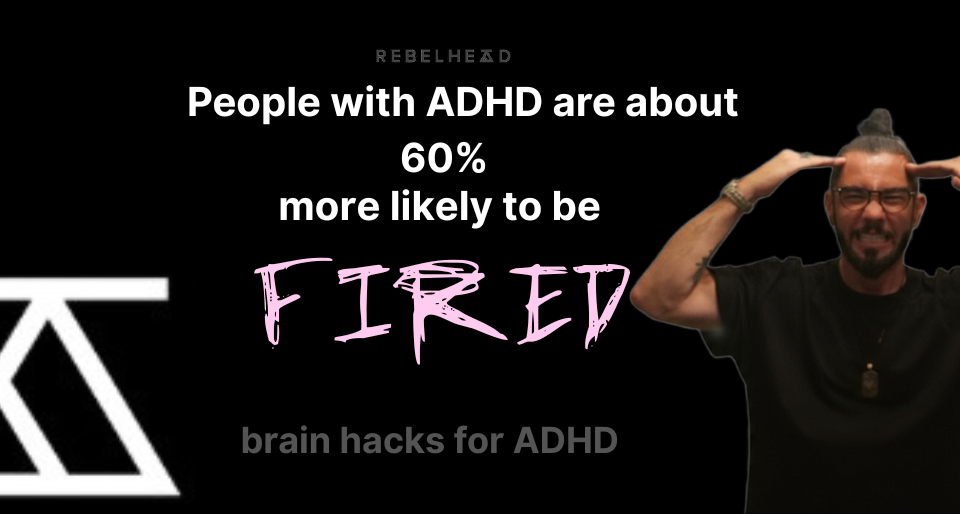
That’s a powerful, and troubling, statistic, and the reasons behind it are complex but well-documented. Here’s why people with ADHD are significantly more likely to be fired or face chronic employment issues compared to non-ADHD peers:
🔁 1. Executive Function Challenges
ADHD affects executive functioning, the brain’s management system, which is crucial for:
- Prioritising tasks
- Managing time
- Remembering deadlines
- Staying focused in long meetings or repetitive tasks
When those skills are impaired, even highly intelligent and motivated people may struggle with job expectations, especially in rigid or bureaucratic workplaces.
🔔 2. Inconsistent Work Performance
ADHD often comes with what’s called performance variability. That means an employee may excel one day and struggle the next, not out of laziness, but due to fluctuating attention, focus, or emotional regulation.
To managers who don’t understand ADHD, this inconsistency may appear as unreliability.
🧠 3. Distractibility and Missed Details
Frequent distractions, difficulty concentrating in open-plan offices, or missing small (but important) instructions can lead to:
- Mistakes
- Missed deadlines
- Perceived carelessness
This is particularly damaging in detail-oriented or deadline-driven jobs, leading to disciplinary action or job loss.
😔 4. Rejection Sensitivity and Conflict
Many with ADHD experience Rejection Sensitivity Dysphoria (RSD), which can cause:
- Overreaction to criticism
- Emotional outbursts
- Withdrawal or defensiveness when receiving feedback
This may lead to interpersonal conflicts or being labeled as “difficult to manage.”
🧱 5. Rigid Work Environments
Traditional work environments are often not built for neurodivergent minds. Lack of:
- Flexibility
- Autonomy
- Quiet workspaces
- Task variety
…can lead to disengagement, underperformance, or even quitting out of frustration.
🕵️♀️ 6. Masking and Burnout
To “fit in,” ADHD employees often mask their symptoms, overcompensating to meet expectations. This leads to:
- Chronic stress
- Anxiety
- Burnout
- Decreased output over time
Eventually, the stress may cause performance to drop, triggering job loss or resignation.
🧩 7. Misunderstanding by Employers
Few managers are trained to recognise ADHD symptoms. ADHD traits are often misinterpreted as:
- Laziness
- Lack of motivation
- Carelessness
- Poor attitude
This misinterpretation leads to unfair evaluations, stalled promotions, and terminations.
🧰 8. Lack of Workplace Accommodations
Many ADHD workers don’t know they can ask for:
- Flexible hours
- Written vs verbal instructions
- Quiet workspaces
- Task breakdowns
- Without accommodations, they’re more likely to struggle and be seen as underperforming.
💬 9. Delayed or Missed Diagnosis
Many adults with ADHD are undiagnosed or only diagnosed later in life, especially women and people of colour. Without a diagnosis, they don’t know why they struggle, and neither do their employers.
🛠 10. Poor Fit, Not Poor Ability
Many ADHD individuals aren’t “bad employees”, they’re just in the wrong roles or environments. When placed in roles that value speed, creativity, or crisis response, they often excel.
Sources:
Centre for ADHD Awareness, Canada
Links:
Popular Articles:
Digital decluttering for ADHD marketers
Managing creatice chaos with ADHD